
Find a book

A Book a Month
We can send a book a month for six or twelve months - the perfect gift. More »

Café Music
Listen to our album of Café Music while browsing the site. More »

A parallel in pictures to the world of Persephone Books.
To subscribe, enter your email address below and click 'Subscribe'.
9 February 2016
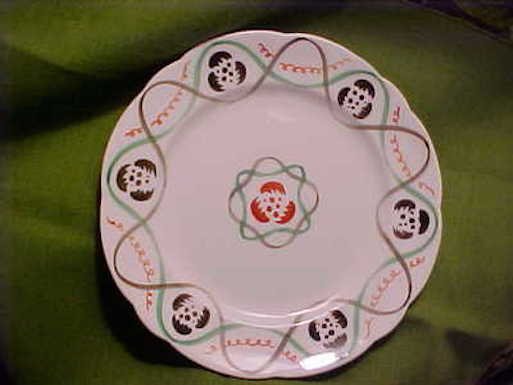
This plate, which was in the 1934 Harrods exhibition, designed by Freda Beardmore, was recently sold on Ebay in America, so its whereabouts are now unknown. Another plate and a cup and saucer are in the V and A.
8 February 2016
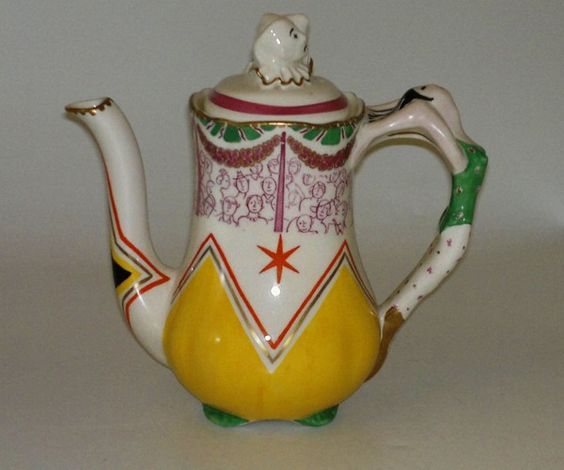
One of the highlights of the Beverley Art Gallery (where we went last year in homage to Fred and Mary Elwell, cf. the Post here and for the previous fortnight) was its exhibition based on the 1934 Harrods Exhibition. An article in the local paper was headed ‘Bloomsbury comes to Beverley’ and it said: ‘The exhibition will revisit an unusual experiment in the history of art and design, which appeared at Harrods store in London in 1934. Twenty-six painters, sculptors, illustrators and muralists were invited to work with ceramic factories to produce tableware for everyday use.’ Here is a good piece about the exhibition by Richard Ansell. And on the Post today: a picture of a rather odd but interesting jug by Laura Knight, part of her Circus set.
5 February 2016
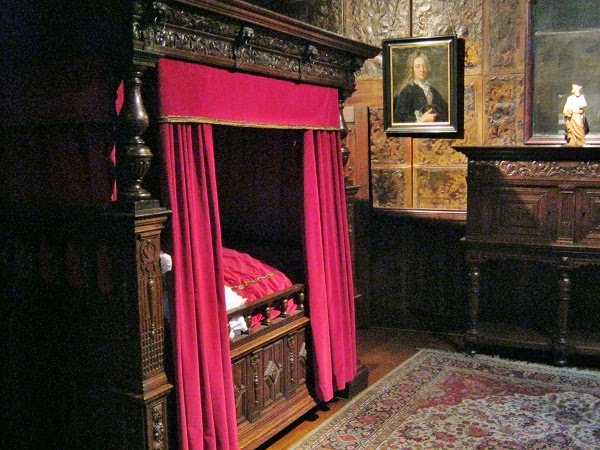
One of the most fascinating things about the Plantin-Moretus Museum is its domesticity: the family lived above the shop and in the shop, the type setting and printing rooms were next to the sitting and dining rooms and there was a much greater integration of family and work life than we have nowadays, with our mad separation of offices and schools so that they are empty for twelve hours a day. If we followed the Plantin-Moretus model and integrated everything, we would solve our housing difficulties in one go. But it would need a huge shift, in attitudes, planning laws and expectations. Yet there are shifts eventually. This Plantin bed was rather fascinating. The caption reads: ‘The carved oak four-poster dates from a time when people were advised to sleep more or less sitting up. According to the medical science of the day it aided the digestion. This is why the bed is very short.’ This slightly fills one with despair – perhaps half an hour on the What Doctors Don’t Tell You website is called for.
4 February 2016
A page from a book by Carolus Clusius (1526-1609): Rariorum plantarum historia (Antwerp: Plantin-Moretus, 1601). The 1109 woodcuts were cut by Gerard van Kampen after drawings by Clusius and Pieter van der Borcht. So our edition of Gardeners’ Choice is in a tradition stretching back more than 400 years, indeed more than 450 years since the first Carolus Clusius book printed by Plantin was 1561.
3 February 2016
‘The compositor, or typesetter, plucked the lead letters and spaces from the type case in the right order and assembled them in his composing stick to make up a complete line. One by one the lines were transferred to stout wooden trays known as galleys, until a column or page was formed. Then a number of galleys were joined together to make what’s called a forme, on which a sheet would be printed. After the whole process of printing and proof-reading the former was returned to the typesetter who redistributed all the letters to the type cases. In a working day a typesetter had to be able to prepare one forme’ (Plantin-Moretus Visitors’ Guide).
2 February 2016
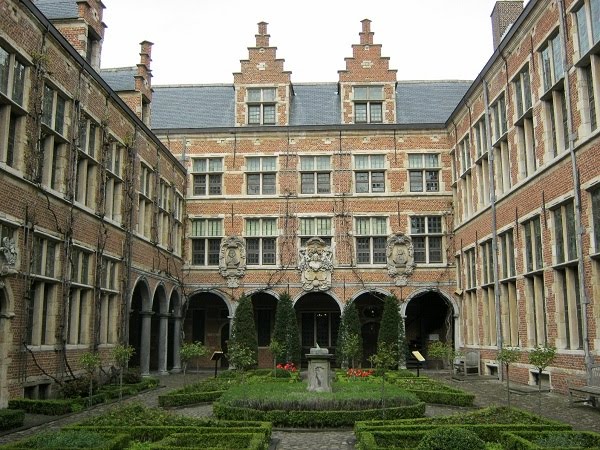
The medieval buildings and courtyard garden were home to the Plantin and Moretus families. Cristoffel Plantin (1520-89) was the bookbinder, leather worker and printer who founded the most important publishing house in Europe, Officina Plantiniana. Jan Moretus married Plantin’s daughter and he and his sons continued the increasingly successful business.
1 February 2016
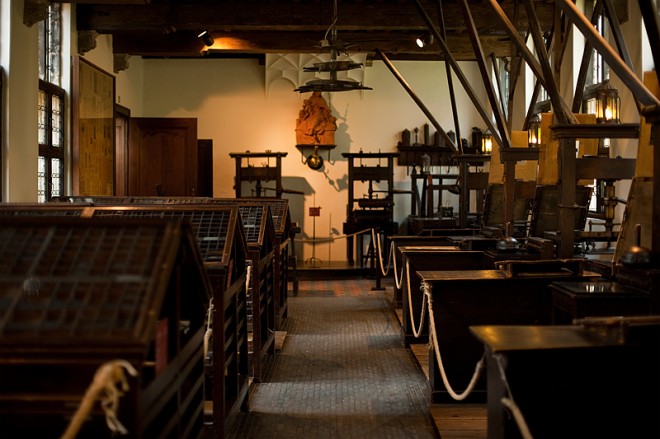
A weekend visit to Holland to celebrate the Dutch edition of The Exiles Return. First of all, Antwerp: a fascinating place, especially for a publisher – the Plantin-Moretus Museum is quite unlike anything else, as it says on the website ‘it is just as if after 440 years the working day is about to begin for the type founders, compositors, printers and proofreaders in the world-famous printing works. The oldest printing presses in the world are there, intact and ready to roll.’ In the printing room movable type letters were held in the desks on the left, the printing was done on the presses on the right.