
Find a book

A Book a Month
We can send a book a month for six or twelve months - the perfect gift. More »

Café Music
Listen to our album of Café Music while browsing the site. More »

A parallel in pictures to the world of Persephone Books.
To subscribe, enter your email address below and click 'Subscribe'.
30 January 2018
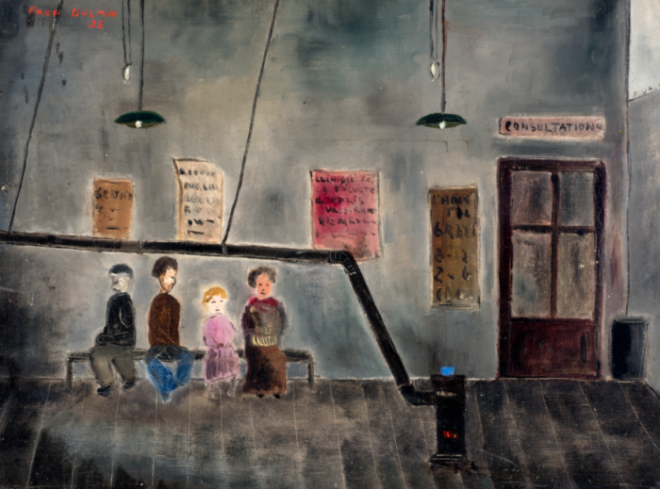 Fred Uhlman was born in 1901 and qualified as a lawyer. He left Germany in 1933 and went to Paris. ‘There, unable to work as a lawyer and encouraged by his cousin Paul Elsas, who was a painter, and Paul Westheim, a German refugee art historian, who had promoted unknown talents in the Weimar republic, Uhlman started to paint successfully in a naïve and colourful style’ (Burgh House website). This was painted in Paris in 1935.
29 January 2018
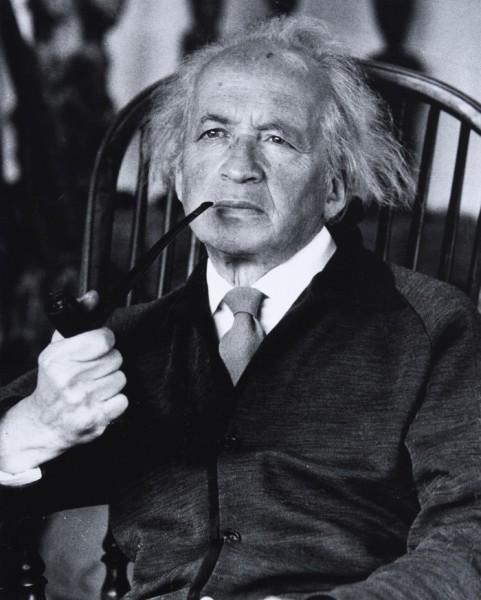
One of the ‘fifty books we wish we had published’ for sale in the shop is Reunion, a novella by the painter and writer Fred Uhlman. It is an unforgettable, extraordinary book and we must sell two or three copies a week just by pressing it into people’s hands. An exhibition about Fred Uhlman has just opened in Burgh House in Hampstead so the Post this week celebrates him and his work.
26 January 2018
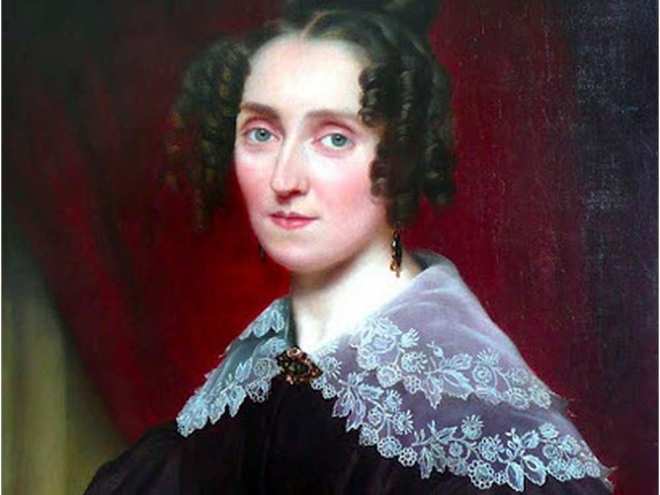
Finally, the French composer Louise Farrenc (1804-75). ‘Nearly forgotten today, she enjoyed some recognition in her own time. Schumann and Berlioz had positive things to say about her music. It is sometimes assumed that the failure of that music to enter the repertoire stems from prejudice against women. This is a vexed question. From 1842-72, she was professor of piano at the Paris Conservatoire. That she was the only woman to hold so lofty a position at the institution confirms both the existence of prejudice and the capacity of individuals to transcend it. She wrote three symphonies, the first was performed in Montreal in 2016‘ (Clemency Burton-Hill). If there is a common thread running through the lives of these women composers it is that mostly they led long lives; mostly they were successful during their lifetime; but mostly they were then completely forgotten. It is as if society was prepared to praise them while they were alive but no one wanted to tend their reputation after their death. This riff must sound wearily familiar to every Persephone reader.
25 January 2018
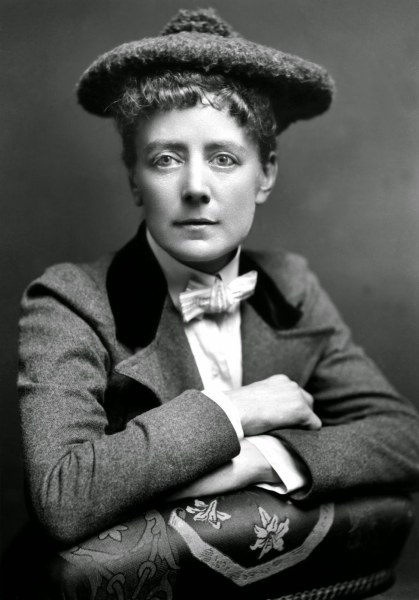
No one can say Ethel Smyth (1858-1944) has been ignored and her professional and private life was too full of incident to be compressed into a short Post, details here. She is best-known for the 1911 The March of the Women (excellent photographs accompanying the recording) and ‘the enduring mental picture of her was evoked by the conductor Sir Thomas Beecham. Visiting her in Holloway Prison in 1912, he found the inmates marching and singing it in the courtyard while Ethel “beat time in almost Bacchic frenzy with a toothbrush”‘ (Telegraph, at the time when her Concerto for Violin and Horn was played at the Proms).
24 January 2018
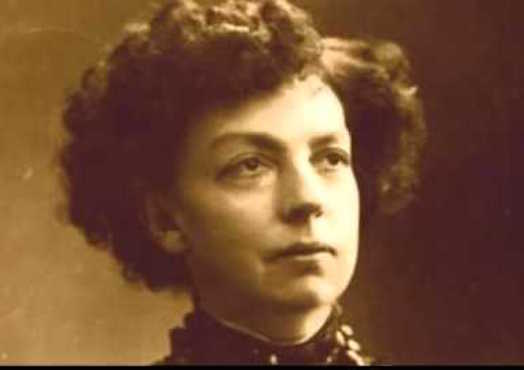
Cecile Cheminade (1857-1944) was a French composer and pianist. Bizet called her ‘my little Mozart’ (when she was eight) but her father believed women should be wives and mothers. Cecile thought they had been handicapped and only a few could get the better of that handicap. She did her best and wrote about 350 works, including opera, ballet, chamber music and songs. In the United States hundreds of ‘Cheminade clubs’ were formed after her debut with the Philharmonic Orchestra in 1908. ‘And yet her music was largely neglected after her death. It’s only recently that her reputation has begun to be revived’ (Year of Wonder). Cecile Cheminade’s ‘Autumn’ is the piece of music Clemency Burton-Hill has chosen for October 1st but this stunning piece of music can be heard here played by Valerie Tryon.. And here is the Flute Concertino, recorded by Sir James Galway as an International Women’s Day tribute in 2016.
23 January 2018
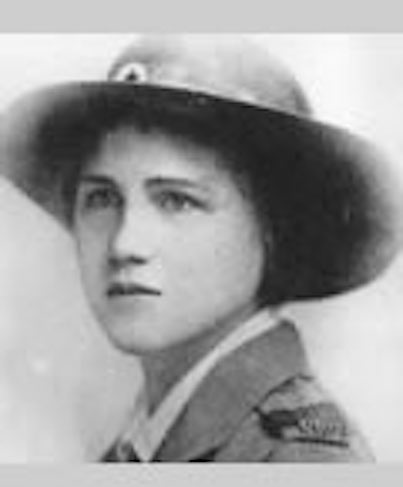
Another composer of songs, but this one had a tragic life, or rather a tragic end to her life: Alma Clarke, more generally known as Alma Rattenbury. She was accused of murdering her husband but was unable to recover from the knowledge that his death was partly her fault (Francis Rattenbury was murdered by Alma’s young lover) and after the trial, at which she was acquitted, she took her own life. Her songs have been reprinted and are available from SJ music. Here is a short film with her playing the piano and one of her songs being performed. Alma had been incredibly brave in the First World War as a transport driver and nurse but during the 1920s turned her attention to her music. The photograph usually used (eg. in the programme notes for Terence Rattigan’s play or that will be used in the forthcoming book about her) shows her much more conventionally beautiful and with overtones of the fallen woman; this is the real Alma.
22 January 2018
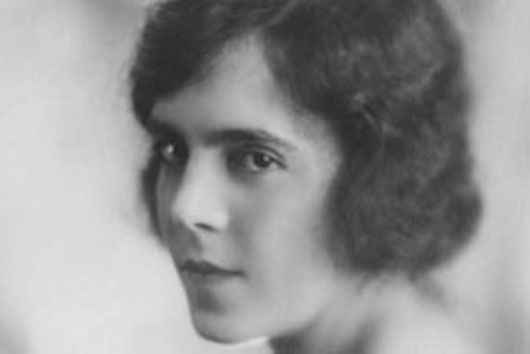
Muriel Herbert (1897-1984) composed about a hundred songs, some of which have been recorded by James Gilchrist, Ailish Tynan and David Owen Norris. She started composing in the 1920s and her songs were so highly regarded that poets such as James Joyce and WB Yeats allowed her to set their work to music. It was not until years after her death that her daughter Claire Tomalin opened the fragile manuscripts and discovered what an extraordinary talent her mother possessed. Here she is talking about her mother Muriel Herbert on Woman’s Hour in 2009 and here is an article in the Guardian. The record of some of the songs is available from Linn.