
Find a book

A Book a Month
We can send a book a month for six or twelve months - the perfect gift. More »

Café Music
Listen to our album of Café Music while browsing the site. More »

A parallel in pictures to the world of Persephone Books.
To subscribe, enter your email address below and click 'Subscribe'.
28 November 2017
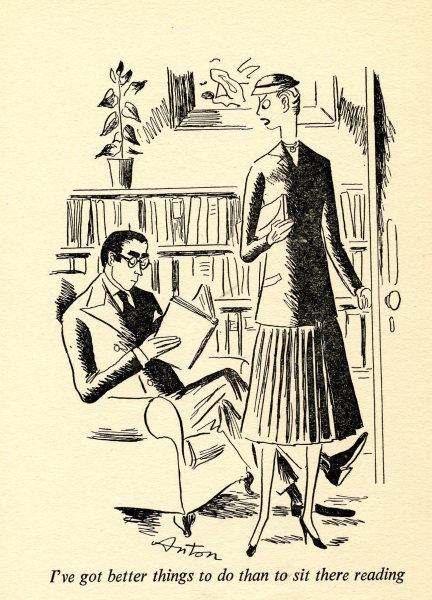
‘No, I haven’t actually read it, but –’ begins: ‘I’ve seen the reviews, it’s one of a set, I thought I would when I have my operation, I’m not a great reader I’m afraid, you see the author’s a friend of my mother’s, I saw the film, everyone tells me it’s frightfully good’ and thus continues for twenty lines more, concluding with what this oh-so annoying woman says to the poor man peacefully reading. (Interestingly, the book is rather large so is probably non-fiction rather than ‘only a novel’.)
27 November 2017
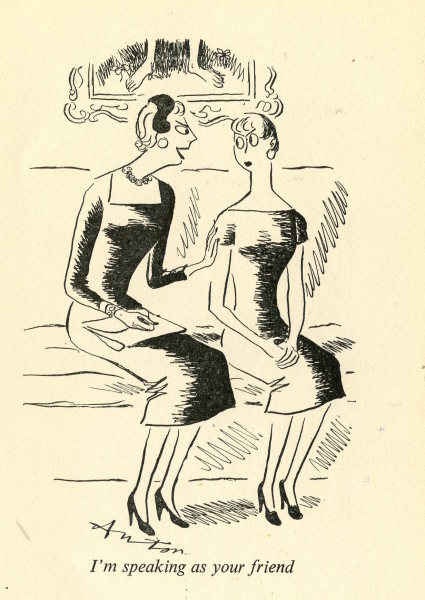
‘Her first serious novel will show her to be as great a master of that art as she has already shown herself a master of satire’ wrote the Manchester Guardian percipiently in 1948, the year before the publication of Little Boy Lost. For Marghanita Laski began her writing career as a satirist with Love on the Super Tax in 1944, To Bed with Grand Music in 1946 and Tory Heaven in 1948. We publish the latter in April and are alternately laughing and crying as we get it ready for the printer. It is about the England that the thirty-five or so rightest of right-wing Tories – currently holding the government and the country in thrall – would like to create. The reason we had not considered reprinting it before is that it seemed irrelevant. Now, in its description of the vision of Jacob Rees-Mogg et al it has become shatteringly relevant. And very, very funny, if one can bear to laugh. But even after writing Little Boy Lost, The Village and The Victorian Chaise-longue, Marghanita Laski continued to write satire. In 1955 she published Apologies, twenty-two pieces (originally published in magazines) illustrated by ‘Anton’ (Antonia Yeoman). Here is the first drawing in the book illustrating ‘To Tell You the Truth’ and here are the last twelve lines: ‘I did wonder, I read it so long ago I’ve forgotten it, I started in plenty of time, it’s mother I mind for, she just did it to be unpleasant, I’ll definitely bring it next time, you know you can say what you like to me, I didn’t see you, I’m speaking as your friend, there’s no reason at all – she just doesn’t like me, I’m not interested in men, no one would know unless you told them, I did try.’ Ouch and triple ouch.
17 November 2017
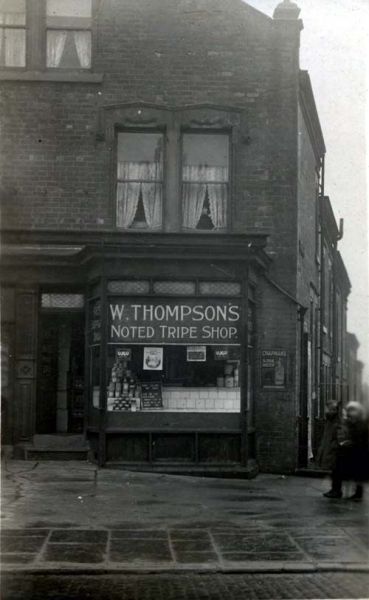
‘”I feel that I must take a hand in politics, and I’m going to join the Labour Party and work in my local division. I don’t only feel that a social and economic change must be made to come, I feel that it is inevitably coming. All this terrible piling up of Fascism and Nationalism, this swing back to the barbarian, is the last struggle of the old world. I think that unless all of us who see this and want the change take a hand, we may be crushed by the weight of the dying, or the struggle may be so bitter that the things worth keeping, liberty, humanity, decency, toleration, art and culture, will go down in the ruin. I hope that in England the change-over will come without violence. That depends on how many of us are willing to accept it and help it on. Especially I feel that this is a time when moderate men ought not to keep out of things. If we do, we can’t complain because the world is slipping away from moderation. It’s so easy to talk about Liberty and Democracy and stand apart from either side doing nothing. We’ve got to preserve Liberty and Democracy by going into things and helping to save them out of the wreck. Anyhow, that’s my personal feeling, so I must go by it’ (p. 286). Don’t concludethat because we have quoted five such political passages National Provincial is a boringly political book. It is a gripping read, oddly enough, and we are proud to be publishing it next autumn. (It’s already available as an e-book but good luck to anyone who wants to plod through its 600 pages on a screen. We recommend waiting for a nice grey edition!)
16 November 2017
 ”
”
‘She idly watched the people coming in and out. Their faces were preoccupied, a good many of them worried. They looked as though they were fussing about something, getting the right cake, getting home in time for lunch, remembering the shopping they had come to do. Very few of them looked as though they were enjoying themselves, as though there were any pleasure in the mere fact of being alive, able to move and speak and buy cakes on a frosty November morning. Clare had a vision of people passing through life as through a railway station, squandering the moments they might have lived in because of some inner, compelling urgency that was making them always intent on some moment that was coming. We have got disorientated, she thought, pushed like a dislocated limb off this business of living! ‘(p.233)
15 November 2017
‘Mary sat with her hands locked together and tears running down her cheeks. These were not the enemy, these men going to war. Hatred itself was the enemy, hatred, as always, by greed out of vanity, once more victorious, once more successfully loosed in Europe. It had all been in vain, the shattering lesson of the last war, the birth of the League of Nations, the growing desire for peace. Once again the sane, ordinary man who hated nobody and wanted to get on with his job was to be trapped by powerful forces, misled by his own generosity and idealism and broken on the wheel’ p. 179 National Provincial. (A kind Persephone reader has very kindly put the original Gollancz jacket for the book on Twitter here.)
14 November 2017
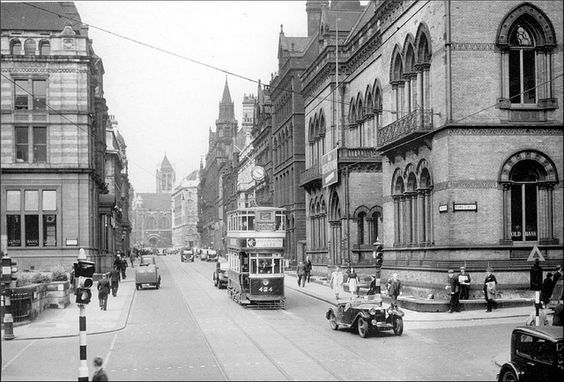
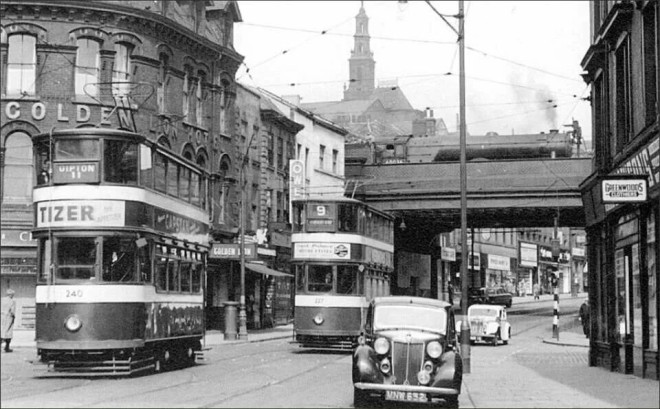
‘”Oh,” said Stephen. “Politics.” ‘”Yes, but you can’t say ‘politics’ in that sort of voice nowadays, can you?” “What sort of voice did I say it in?” “As though it was something separate, like keeping bees, or playing chess.” “And you don’t think it is something separate?” “Well, do you, really? It seems to me it’s everything – how we live and behave to each other, how we bring up children, what sort of world we want to make it.” She added,”Of course, I’ve heard it going on all-round me in my uncle’s house since I was small. He’s fought all his life for Socialism. Being in his house was always like being with a regiment on active service.” “I was brought up in the opposite camp.” “Yes, of course you would be.” An obscure ease stole over Stephen, a feeling of being able to speak freely. He said, “I’m not at all sure I’m in it now.” “No, I don’t expect you are. I don’t think any generous or intelligent person will be able to stay in it much longer.” “Of course, my father – nobody could say he’s not generous and intelligent. He’s a stout Tory.” “That generation decently could be.” “And our generation decently can’t?” “I think not.”‘ [Who needs ‘blurbs’. This quote, from p.102, tells you everything you need to know about National Provincial. It’s the moment Stephen and Mary fall in love, or begin to. And it’s the moment a 2017 reader realises that a book written in 1937 says it all for us previously a-political people, but in an intensely readable and interesting way – until the Brexit and Trump disasters I’m afraid we at Persephone Books were pretty much the bee keepers and chess players.] The photograph is Leeds in the 1930s looking north towards the Headrow.
12 November 2017
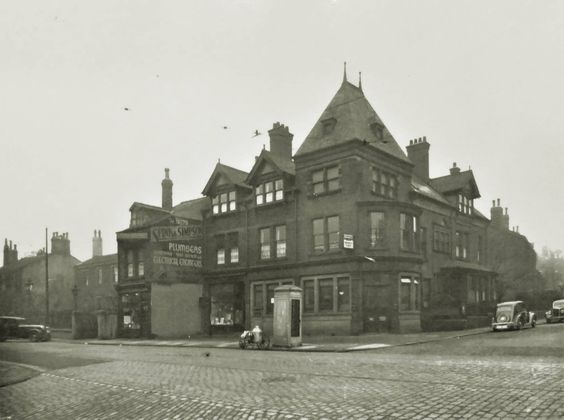
The Post this week is about a novel, National Provincial by Lettice Cooper, a knock-out read that has totally absorbed our heart and mind over the last week. It was published in 1938 and when it was re-issued fifty years later the author wrote a short preface, explaining that it was about a girl who comes back to Leeds after having been educated and worked in the south. She is a journalist on the local paper and the local elections are seen through her eyes. Lettice Cooper ends the brief description of her book by saying: ‘I would wish for what all the politicians so glibly talk about – but which is so difficult to achieve – an undivided nation.’ But she would have been horrified at what is happening to the Dis-United Kingdom eighty years after her book was written. Disbelieving, even. She could not have imagined that so little would have changed. Here is a young radical: ‘”Look at the nation! Look at the world! A few dogs in the manger, crammed with ideas a hundred years behind the times, sitting on everything and keeping it to themselves while the majority are shut out, and go short.” He brought his fist suddenly down on the table making the knives and forks rattle. “I can’t understand,” he cried, “how anyone can sit still and let it go on happening”‘ (p.96). (There will be more of the same all week: unpolitical readers of the Persephone Post should avoid it till next Monday.) The photograph is of Hyde Park, Leeds in 1937.