
Find a book

A Book a Month
We can send a book a month for six or twelve months - the perfect gift. More »

Café Music
Listen to our album of Café Music while browsing the site. More »

A parallel in pictures to the world of Persephone Books.
To subscribe, enter your email address below and click 'Subscribe'.
22 April 2016
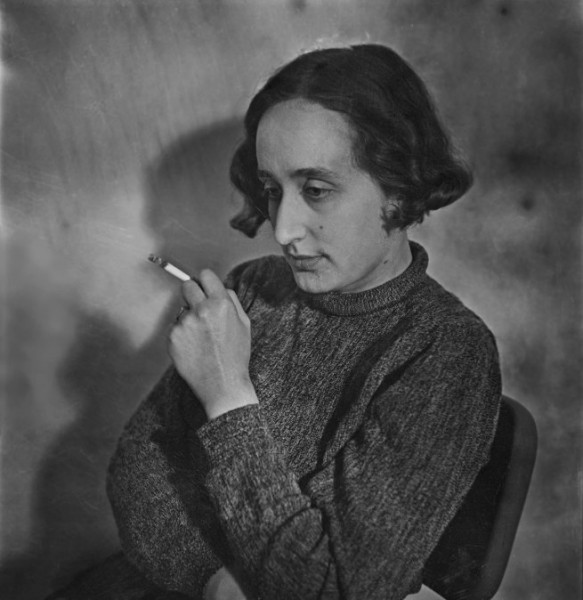
This 1936 self-portrait by Edith Tudor-Hall is © the Scottish National Portrait Gallery and along, with many other photographs, was presented by Edith Tudor-Hall’s brother Wolfgang Suschitzky ten years ago; to read more about her go to the site of the recent Scottish NPG exhibition in Edinburgh here or the site of the exhibition at the Albertina in Vienna here.
.
21 April 2016
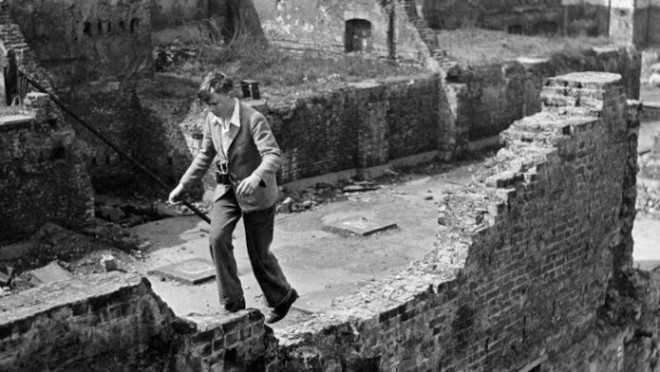
Balancing on War Ruins: Moorgate taken by Edith Tudor-Hart in 1946. So much of London was like this in the late 1940s and on into the 1950s, in some ways it is miraculous that so many Georgian and Victorian buildings did survive at all: gloomy thoughts prompted by Rowan Moore’s polemical Slow Burn City which is partly about the catastrophe of Boris’s 400 skyscrapers soon to be unleashed on unsuspecting Londoners; read this article and weep. Some of us who used to try and be nice about Boris because we love and admire his amazing mother Charlotte, now cannot do anything but utter inward shrieks and outward expressions of despair and rage.
20 April 2016
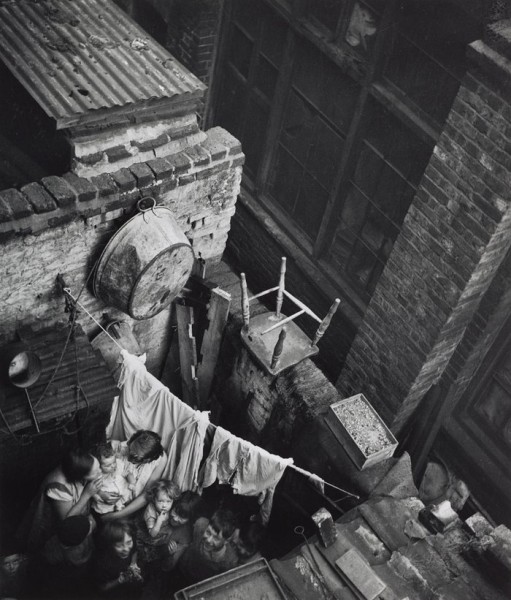
Gee Street, Finsbury (1936) by Edith Tudor-Hart is in the exhibition at the Barbican called Strange and Familiar: Britain as Revealed by International Photographers curated by Martin Parr. (Gee Street has been completely rebuilt and is the site of the Clerkenwell and Shoreditch County Court; there is a photograph of the street as it used to be here.)
19 April 2016
![Edith Tudor-Hart (print: Owen Logan), Untitled [Demonstration, South Wales]](https://persephonebooks.flywheelsites.com/wp-content/uploads/2016/04/Tuesday-again-copy-596x600.jpg)
‘Edith Tudor-Hart was in South Wales in the 1930s following her husband’s appointment as a GP there. As communists they would have sympathised with the economic hardship of the miners in the Rhondda valley; with the help of other unions, the National Unemployed Workers’ Movement (NUWM) organised Hunger Marches, which demanded fairer unemployment legislation. To take this photograph Edith Tudor-Hart perched on a post opposite the crowd of men’ (National Galleries, Scotland).
18 April 2016
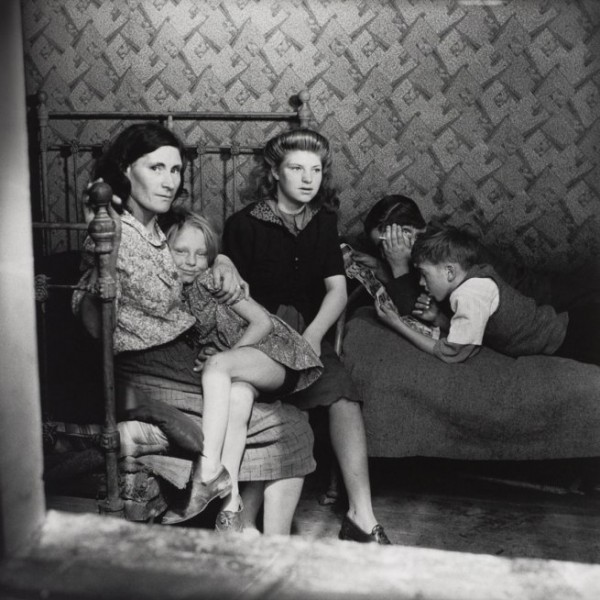
A great woman photographer this week, well-known to some but many people will not have heard of her – Edith Tudor-Hart (1908-1973). She was a ‘low-level Soviet agent while exiled in Britain after the Second World War who destroyed most of her photos as well as many negatives out of fear of prosecution in 1951. Known in the Austrian history of photography as Edith Suschitzky, she studied at the Bauhaus and worked as a photographer in Vienna – while being a Soviet agent. In 1933 she married Alex Tudor-Hart, who also had close connections to the Communist Party, and fled with him to Great Britain. There she created brilliant social reportage in the slums of London or in the coal mining areas of Wales’ (more details here). She was particularly concerned with ‘issues of child welfare, heath and education and received commissions from agencies such as the British Medical Association, Mencap and the National Baby Welfare Council. In contrast to the static, studio-based portrait photography customary at the time, she showed families and especially children as natural and lively.’ Family, Stepney, London is c. 1932.Everything about this photograph is extraordinary – but most of all the beauty of the mother.
15 April 2016
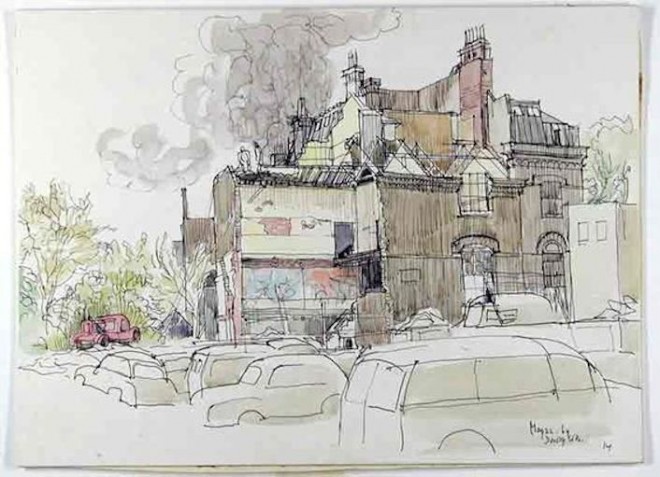
Dorothy Coke painted many water-colours showing the demolition of the old Brighton art school in 1964. On one of them she has written ‘why?’ – and of course she was right, fifty years later the powers-that-be at Brighton must very much regret that they didn’t renovate and extend a beautiful and characterful building rather than replacing it with something merely useful. ‘Have nothing in your houses that you do not know to be useful or believe to be beautiful’ (William Morris): they opted for the former, deciding that even in an art school beauty was too complicated although, to be fair, perhaps 21st century art students do think their building beautiful. (Jennings Fine Art has kindly sent us a pdf of the catalogue of the Dorothy Coke exhibition eighteen months ago. If you email lydia@persephonebooks.co.uk we shall pleased to send it.)
14 April 2016
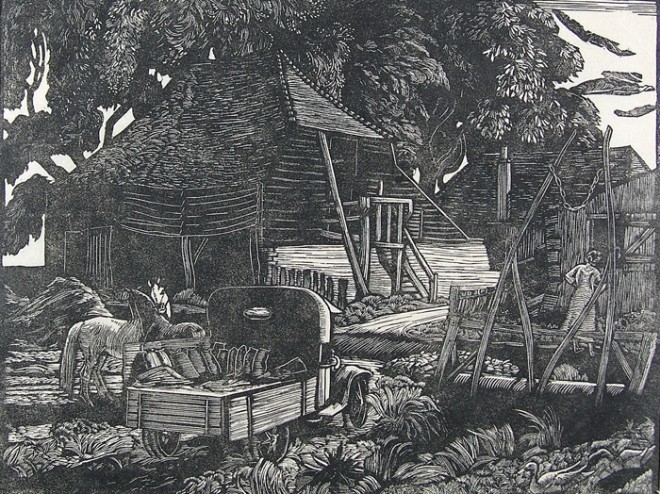
Dorothy Coke taught at Brighton art school, lived in Rottingdean, and worked away in many different mediums, one of them being wood cuts. The Black Barn, Kent is undated but has a 1950s feel.